





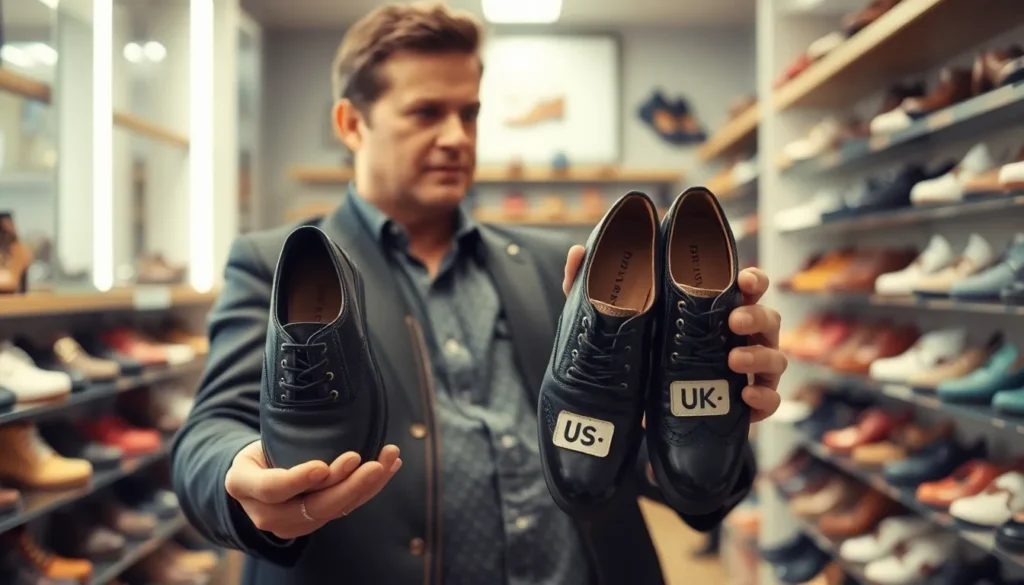
Navigating the world of shoe sizes can feel like trying to decode an ancient language. One moment you’re confidently selecting a pair of sneakers in the US, and the next you’re left scratching your head over UK sizes. It’s like stepping into a parallel universe where a size 10 means something entirely different.
Understanding Shoe Sizes
Understanding shoe sizes is essential for finding the right fit. The differences between sizing systems can create confusion for many shoppers.
The Importance of Accurate Sizing
Accurate sizing plays a crucial role in comfort and aesthetics. Ill-fitting shoes lead to discomfort, blisters, and long-term foot problems. A proper fit ensures better posture and support while reducing the risk of injuries. Selecting the right size enhances the overall wearing experience. In an ideal situation, measuring feet regularly helps account for changes in size over time.
Differences Between US and UK Shoe Sizes
Differences between US and UK shoe sizes often surprise consumers. Generally, US sizes are larger by one unit compared to UK sizes. For example, a US size 8 corresponds to a UK size 7. Styles and brands might also influence fit and sizing. Knowing these distinctions enables shoppers to make informed decisions when purchasing shoes. Additionally, specific brands may apply unique sizing guidelines, increasing the chance of confusion. Always refer to the brand’s sizing chart for accurate conversions.
Conversion Table

Understanding size conversions between US and UK shoe sizes simplifies the shopping experience. The following tables present conversions for men’s and women’s shoe sizes.
Men’s Shoe Sizes
US men’s shoe sizes typically range from 6 to 16. To convert to UK sizes, subtract one size from the US size. For instance, a US size 10 translates to a UK size 9. Below is a conversion chart for reference:
| US Size | UK Size |
|---|---|
| 6 | 5 |
| 7 | 6 |
| 8 | 7 |
| 9 | 8 |
| 10 | 9 |
| 11 | 10 |
| 12 | 11 |
| 13 | 12 |
| 14 | 13 |
| 15 | 14 |
| 16 | 15 |
Women’s Shoe Sizes
| US Size | UK Size |
|---|---|
| 4 | 2 |
| 5 | 3 |
| 6 | 4 |
| 7 | 5 |
| 8 | 6 |
| 9 | 7 |
| 10 | 8 |
| 11 | 9 |
| 12 | 10 |
Tips for Converting Sizes
Converting shoe sizes can be straightforward with the right approach. Accurate foot measurement serves as the first key step toward finding a proper fit.
Measuring Your Feet
Start by measuring both feet. Measuring while standing ensures the most accurate results. Use a ruler or tape measure to note the length and width of each foot. Compare the measurements against a sizing chart to pinpoint the correct size. Keep in mind that feet can vary in size, so always go with the larger measurement. This practice helps account for slight differences, promoting more comfort when selecting shoes.
Considering Brand Variations
Recognize that brands may vary in their sizing. Different manufacturers often use distinct lasts, which can influence fit. Review brand-specific size charts carefully to ensure proper conversion between US and UK sizes. Some brands may even offer their own conversion guidelines or foot shapes. Using customer reviews can provide additional insights into how a shoe fits compared to standard sizes. Prioritize trying on shoes from each brand to determine what feels best for individual comfort.
Common Mistakes to Avoid
Avoiding common mistakes in shoe size conversion enhances the shopping experience and ensures a better fit.
Relying Solely on Online Charts
Online charts provide helpful guidelines but can lead to inaccuracies. Relying solely on these charts often overlooks individual brand differences. Sizes can vary substantially between manufacturers, so a size 9 in one brand may not equal a size 9 in another. Shoppers benefit from trying on shoes whenever possible, as it serves as a reliable method for finding the perfect fit. Always consider brand-specific size charts to reduce the risk of selecting the wrong size.
Ignoring Width Sizes
Width sizes play a crucial role in shoe comfort but often get overlooked. Shopping exclusively by length may result in shoes that don’t fit well. Shoes come in various widths, such as narrow, standard, wide, and extra-wide. Individuals with wider or narrower feet should seek options that match their width requirements. Checking the width size alongside length ensures a more comfortable fit and minimizes the risk of blisters or discomfort. Avoid skipping this aspect to find the perfect balance between length and width.
Navigating the differences between US and UK shoe sizes can be a daunting task. However with the right tools and knowledge shoppers can simplify the process. Understanding the one-size difference between the two systems is crucial for achieving a comfortable fit.
Utilizing conversion charts and measuring feet accurately can significantly enhance the shopping experience. It’s essential to consider not only the length but also the width of shoes for optimal comfort. By keeping these tips in mind shoppers can confidently select the perfect pair of shoes without the hassle of size confusion.