





When it comes to space exploration, one question keeps igniting curiosity: How far can we really go with the technology we have today? If you’ve ever dreamed of zooming through the cosmos faster than you can say ‘asteroid belt,’ you’re not alone. Yet, the reality of our current capabilities might leave you a bit disappointed. But don’t worry, there’s enough fascinating information here to keep your celestial dreams alive. So, buckle up as we jump into the vast expanse of human imagination and technological advancement.
Understanding Our Current Space Technology
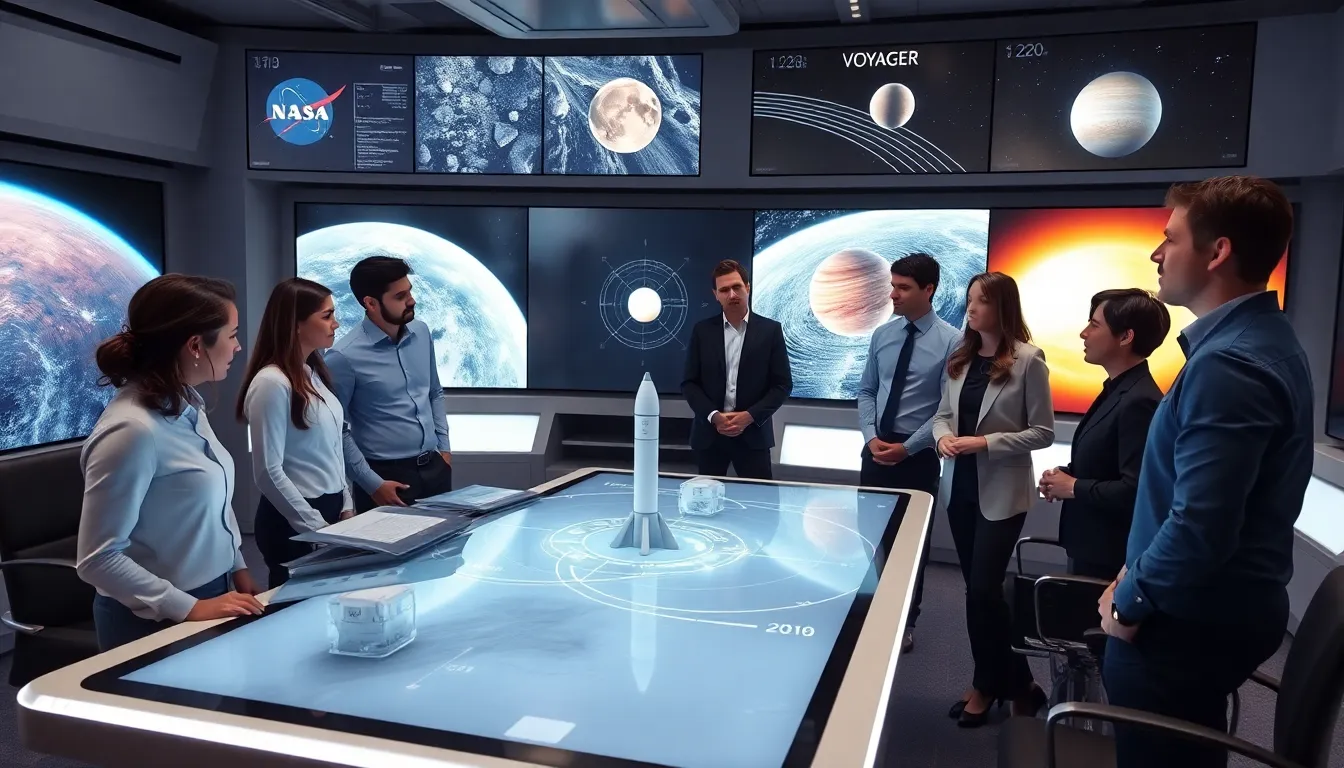
Space exploration has come a long way since the first Sputnik satellite blasted off in 1957. Today, we have a range of technologies that make interstellar travel possible, at least in theory. NASA’s Space Launch System, for example, is designed to be the most powerful rocket ever built, intended to take humans back to the Moon and beyond.
Also noteworthy is the Voyager spacecraft, launched in 1977. These small space probes are now over 14 billion miles from Earth, sending back valuable data about the outer solar system. While they demonstrate our incredible journey so far, they also highlight a crucial aspect: they’re powered by a technology that, while impressive, is not an option for crewed travel. The limitations in power sources and propulsion indicate that we need more than just advanced engineering: we need innovative ideas that push beyond our current understanding.
Limitations of Current Propulsion Systems
When considering how far humans can travel through space with existing technology, the limitations of current propulsion systems play a major role. For instance, conventional rockets, like those used in the Apollo missions, rely on chemical propulsion. This method, while effective for travel within our solar system, significantly slows down once we consider distances beyond it.
The Range of Human Space Travel
To truly grasp the scope of these limitations, it’s essential to understand the range of human space travel. The International Space Station (ISS) orbits the Earth at about 250 miles. The Apollo missions managed to reach the Moon, roughly 238,855 miles away. Current technology allows for short missions within our solar system, but the nearest star system, Alpha Centauri, is over 4 light-years away, approximately 24 trillion miles. Even with our best rockets, such a journey would take thousands of years. This blunt reality places a heavy ceiling on our extraterrestrial aspirations.
Exploration Beyond Our Solar System
The idea of exploring beyond our solar system sounds thrilling, but currently, it’s more science fiction than science fact. Interstellar probes like the proposed Breakthrough Starshot aim to send tiny spacecraft to Alpha Centauri at about 15-20% the speed of light using light sails propelled by lasers. Even with this, it would take over 20 years to reach its destination. The challenges to achieve such speeds are immense: energy requirements, material durability, and navigation over that vast distance remain largely unresolved.
Consider also the challenges of sustaining human life during such long voyages. The issue is not only how to get there but how to survive once you arrive. Current life support systems were designed for short-term missions and would need significant advancements to support humans in a multi-generational context in space.
Potential Future Technologies
Looking to the future, there are several promising propulsion technologies on the horizon. One of the most talked-about concepts is nuclear thermal propulsion, which potentially could double the efficiency of current chemical rockets. Then there’s the concept of antimatter propulsion, which, while still in theoretical stages, could provide incredibly high thrust and efficiency.
Harnessing Fusion Power
Another exciting prospect is fusion power. If scientists can harness fusion, the same process that powers our sun, it could allow spacecraft to travel far faster than current technology permits. Imagine getting to Mars in a matter of weeks instead of months. But, all these technologies are still years away from being realized. What’s needed is not just hope but substantial investment and commitment toward research and development.
The Role of Space Agencies and Private Enterprises
Both government organizations and private companies play pivotal roles in shaping the future of space travel. NASA has plans for Artemis missions that aim to return humans to the Moon and further lay the groundwork for Mars exploration. Meanwhile, private firms like SpaceX are making significant headway in reusable rocket technology, which could revolutionize space travel costs.
Collaborative Efforts
Also, collaboration between these entities can lead to exciting synergy. For example, NASA and SpaceX partnered for the Crew Dragon mission, successfully transporting astronauts to the ISS. Such cooperative ventures not only hasten the development of new technologies but eventually expand the reach of human exploration in the cosmos.