



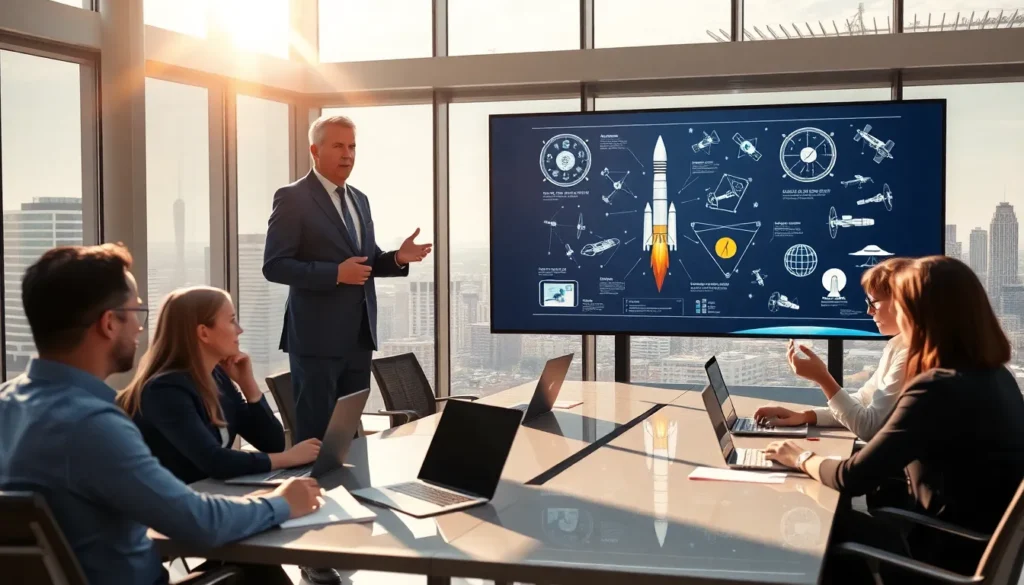

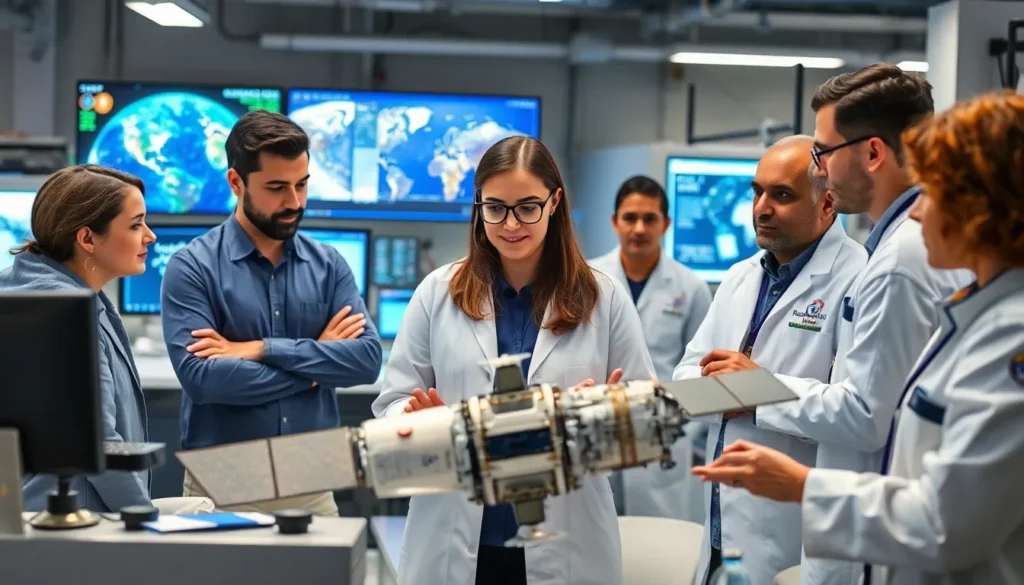
Space technology isn’t just for astronauts and sci-fi movies; it’s woven into the fabric of everyday life. From the GPS that guides your road trips to the satellites that keep your streaming services running smoothly, the wonders of space tech are all around us. Who knew that the same technology that helps scientists explore the cosmos also powers your favorite apps?
Overview of Space Technology
Space technology encompasses various tools, systems, and techniques developed for use in outer space. Satellites represent a crucial example, providing communication, weather forecasting, and navigation services. These devices orbit Earth, transmitting data that supports everyday applications like GPS and real-time streaming services.
Launch vehicles also play a vital role in space technology. Rockets such as SpaceX’s Falcon 9 transport payloads to orbit or beyond, facilitating advancements in science and commercial activities. They enable missions to the International Space Station, provide access to space for research, and deliver satellites that form part of a global communication infrastructure.
Robotic spacecraft, including rovers and orbiters, explore other planets and moons. NASA’s Mars rovers, like Curiosity and Perseverance, gather data about the Martian landscape and atmosphere. This information aids in understanding planetary formations and assessing conditions for potential human exploration.
The evolution of materials science has led to innovative components in space technology. Lightweight, durable materials improve efficiency and reduce costs associated with building and launching spacecraft. Insulation materials developed for extreme space conditions have been adapted for use in consumer products, showcasing technology transfer from space to daily life.
Software systems also contribute significantly to mission success. Advanced algorithms allow spacecraft to navigate autonomously, manage resources, and maintain communication with Earth. These systems ensure operational efficiency, enabling scientists and engineers to gather insights from vast distances.
Space technology continues to transform daily activities while driving scientific discovery. Its development reflects humanity’s quest for exploration, pushing boundaries in both technology and knowledge.
Satellite Systems
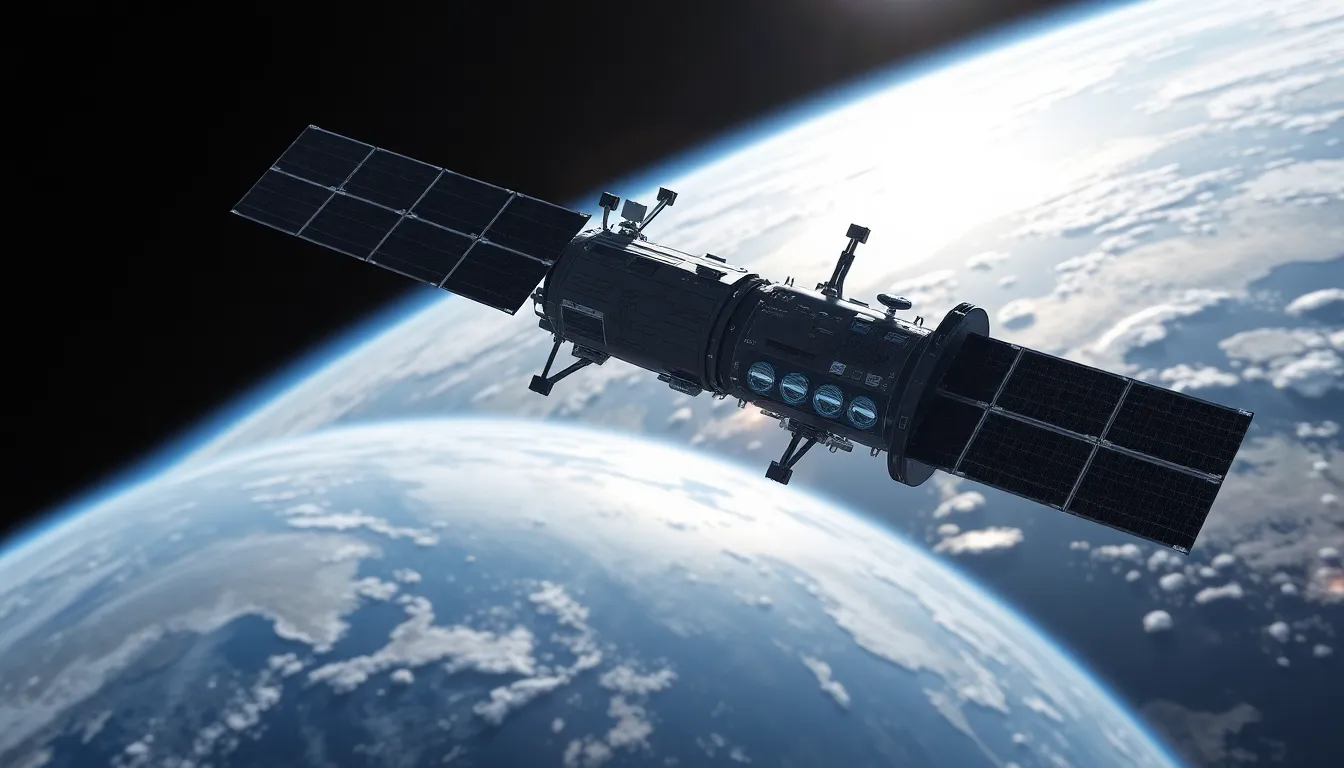
Satellite systems play a vital role in modern space technology, significantly impacting global communications, weather observation, and navigation.
Communication Satellites
Communication satellites enable long-distance communication by relaying signals and data across vast distances. They facilitate services such as television broadcasting, internet connectivity, and telephone services. Geostationary satellites, orbiting at approximately 22,236 miles, remain fixed relative to the Earth, providing consistent coverage. Low Earth orbit satellites, traveling at around 1,200 miles, offer enhanced data speeds with reduced latency. Notable examples include the Iridium and Starlink satellite constellations, which deliver global communication capabilities and internet access to remote regions.
Earth Observation Satellites
Earth observation satellites gather critical data about the planet’s surface and atmosphere. These satellites monitor environmental conditions, track climate change, and assess natural disasters. Instruments onboard collect imagery and sensor data used in various fields, including agriculture, forestry, and urban planning. The Landsat series of satellites, operational since 1972, provides continuous monitoring of Earth’s land cover. Additionally, the Copernicus program’s Sentinel satellites offer detailed insights into air quality and land use changes. This data plays an essential role in informing policy and promoting sustainable development.
Launch Vehicles
Launch vehicles play a critical role in space technology by delivering payloads into orbit. These vehicles encompass various designs and capabilities, ensuring multiple missions succeed.
Rocket Technology
Rocket technology relies on the principles of propulsion to lift payloads beyond Earth’s atmosphere. Liquid-fueled rockets, like NASA’s Space Launch System, utilize liquid propellants for effective thrust. Solid-fueled rockets, such as those used in the Space Shuttle, offer simplicity and reliability. Notable examples include the Delta IV Heavy, known for its heavy lift capacity, and the Ariane 5, praised for its commercial reliability. Innovations in propulsion systems continue to enhance rocket performance and mission success.
Reusable Launch Systems
Reusable launch systems revolutionize access to space by significantly reducing costs. SpaceX’s Falcon 9 showcases the potential of this technology, allowing rockets to land vertically after missions. By refurbishing and reusing rocket stages, launch costs drop considerably, enabling more frequent launches. Other examples include Blue Origin’s New Shepard, which focuses on suborbital flights. Increasing the availability of reusable systems promotes a sustainable space industry and expands opportunities for scientific exploration and commercial ventures.
Space Exploration Missions
Space exploration missions demonstrate groundbreaking advancements in space technology. These missions play a vital role in expanding knowledge about our solar system and beyond.
Mars Rovers
NASA’s Mars rovers, such as Curiosity and Perseverance, are essential for studying the Martian surface. They analyze soil, rock samples, and atmospheric conditions to gather data on the planet’s past and present. Curiosity, for example, assesses habitability by measuring chemical compositions. Perseverance focuses on searching for signs of ancient life. Both rovers utilize advanced technologies like autonomous navigation and high-resolution imaging to capture and transmit detailed information back to Earth.
Space Probes
Space probes like Voyager 1 and New Horizons allow scientists to explore distant celestial bodies. Voyager 1, launched in 1977, has traveled beyond the solar system and continues to send valuable data about interstellar space. New Horizons captured stunning images of Pluto and its moons in 2015, expanding our understanding of the dwarf planet and its environment. Equipped with specialized instruments, these probes gather data on cosmic phenomena, contributing to discoveries about the origins and evolution of the universe.
Human Spaceflight Technologies
Human spaceflight technologies encompass various advancements that support astronauts during missions beyond Earth. Innovations in spacecraft development and life support systems represent critical areas of focus.
Spacecraft Development
Spacecraft development involves designing vehicles for human space exploration. NASA’s Orion spacecraft serves as a significant example, intended for deep-space missions. The culmination of years of engineering, Orion features advanced navigation systems and enhanced safety protocols. Additionally, Crew Dragon, developed by SpaceX, transports astronauts to the International Space Station (ISS). This spacecraft showcases reusable technology, lowering costs and increasing mission frequency. New models continuously emerge, incorporating cutting-edge materials that enhance performance and safety. Each advancement pushes the limits of human exploration while ensuring crew well-being.
Life Support Systems
Life support systems are crucial for maintaining a safe environment for astronauts. These systems manage oxygen, carbon dioxide, and temperature levels to ensure occupant comfort. The Sabatier reactor, employed on the ISS, converts carbon dioxide back into oxygen, illustrating recycling technology in space. Additionally, advanced filtration systems provide clean water and remove microbial contaminants. Monitoring tools track vital signs, enabling early detection of health issues. Each component integrates seamlessly to create a sustainable atmosphere. Innovations in this field contribute significantly to mission success and crew health during lengthy space missions.
Space technology is more than just a tool for exploration; it’s woven into the fabric of everyday life. From GPS navigation to satellite communications, these advancements have reshaped how people interact with the world. The innovations in materials and robotics further enhance both scientific understanding and consumer products.
As humanity continues to push the boundaries of space exploration, the benefits of these technologies will only grow. The ongoing development of launch vehicles and human spaceflight systems promises to unlock new possibilities for discovery and commercial ventures. Ultimately, space technology serves as a testament to human ingenuity and the relentless pursuit of knowledge.