





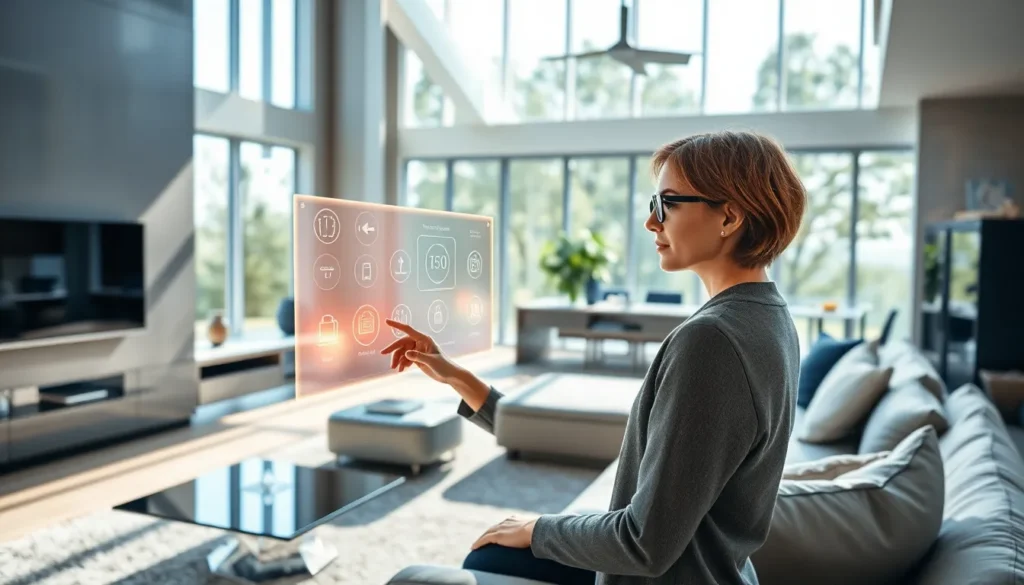
Space age technology isn’t just for astronauts and rocket scientists anymore. It’s infiltrated everyday life in ways that might just make you feel like you’re living in a sci-fi movie. From smart gadgets that seem to read your mind to advancements in healthcare that could make even a superhero jealous, this technology has transformed the ordinary into the extraordinary.
Overview of Space Age Technology
Space age technology represents a significant leap in innovation, drastically altering how people live. Innovations like satellite technology enable instant global communication and navigation. Robotics plays an essential role in daily tasks, with automated systems enhancing efficiency in both homes and businesses.
Medical advancements exemplify the impact of these technologies. For instance, telemedicine allows patients to consult healthcare professionals remotely, making healthcare more accessible. Wearable health monitors track vital signs, fostering proactive health management.
Space exploration has also driven numerous technologies. Materials developed for spacecraft, such as lightweight composites, now find applications in various industries, from automotive to sports equipment. Furthermore, GPS technology, originally designed for military purposes, is now integral to everyday navigation.
Energy solutions have evolved alongside these advancements. Solar panels and energy-efficient systems are now common, promoting sustainability. Additionally, advancements in battery technology enable longer-lasting power sources, influencing electric vehicle development.
Consumer products reflect these technological advancements, showcasing smart appliances that learn user preferences. Smart home systems integrate multiple devices, allowing individuals to control their environment through voice commands or mobile apps.
Overall, space age technology continues to transform the ordinary into the extraordinary, rooting itself deeply into the fabric of modern life. As advancements continue, their influence on society becomes more profound, highlighting the potential for even greater innovations in the future.
Key Innovations in Space Age Technology

Space age technology has led to groundbreaking advancements that shape daily life and facilitate global connectivity.
Satellite Communication
Satellite communication represents a significant breakthrough in global connectivity. It enables instant communication across vast distances, supporting various applications from television broadcasting to internet services. Satellites orbiting Earth facilitate reliable weather forecasting. They provide navigation for countless devices such as smartphones and vehicles. This technology supports international calls, thus transforming personal and business communication. As networks expand, advancements in satellite technology continue to enhance bandwidth and reduce latency.
Space Exploration Vehicles
Space exploration vehicles play a vital role in advancing human understanding of the universe. These vehicles, designed for extreme conditions, allow humans to travel beyond Earth’s atmosphere. Rovers, like NASA’s Perseverance, conduct experiments and gather data on other planets. Crewed spacecraft, such as SpaceX’s Crew Dragon, carry astronauts to and from the International Space Station. Innovations in propulsion systems enhance vehicle efficiency, enabling longer missions. Each mission contributes more knowledge about space, leading to advancements in science, engineering, and daily life.
Impact on Daily Life
Space age technology significantly influences daily life, transforming ordinary experiences into extraordinary ones.
Advancements in Telecommunications
Satellite technology revolutionizes communication by enabling real-time connections across the globe. Instant messaging apps thrive on this innovation, allowing users to connect effortlessly. Social media platforms flourish with advancements, offering a rich tapestry of interactions worldwide. Moreover, streaming services depend on satellite systems, delivering high-quality content anytime, anywhere. Weather forecasting improves due to enhanced satellite data, helping communities prepare for natural events. Efficient connectivity shapes modern business practices, facilitating remote work and collaboration.
Influence on Medical Technology
The rise of telemedicine exemplifies the impact of space age technology on healthcare. Patients access healthcare services remotely, reducing wait times and increasing convenience. Wearable health monitors empower individuals to track vital signs, promoting proactive health management. Advanced imaging technologies utilize satellite-derived techniques to improve diagnostics and treatment precision. Health research benefits from data gathered via these technologies, driving innovation in medical treatments. Remote surgical procedures leverage robotic systems, enhancing surgical precision and reducing recovery times. Overall, the fusion of technology and healthcare enhances patient outcomes, making medical services more accessible and effective.
Future Prospects of Space Age Technology
Future advancements in space age technology promise to reshape various domains of life. Innovations in artificial intelligence are set to enhance how people interact with gadgets, creating more intuitive user experiences. Smart homes may soon integrate advanced AI systems that learn user preferences, further increasing convenience.
Moreover, advancements in satellite technology will likely elevate global connectivity to new heights. With low Earth orbit satellites, high-speed internet may soon extend to remote areas, bridging the digital divide. Remote communication and collaboration will flourish as these initiatives unfold.
In healthcare, wearable technologies are expected to evolve, offering more precise monitoring and real-time health insights. Continuous advancements in telemedicine and remote diagnostics will improve patient access to essential services. Significant growth in personalized medicine may emerge as data analytics improve health outcomes.
Robotics, too, will continue to advance, potentially incorporating more sophisticated algorithms that enhance efficiency in various fields. Automation in industries will likely streamline processes, leading to increased productivity. Robot-assisted functions may become commonplace in daily life, relieving individuals of repetitive tasks.
Sustainability efforts will benefit from breakthroughs in energy technologies. The future may see widespread adoption of clean energy solutions, such as improved solar panels and energy storage systems. Electric vehicles are poised to gain greater market share as battery technology enhances range and efficiency.
Lastly, the integration of space technologies into everyday consumer products will continue transforming lifestyles. Smart appliances may become even more interconnected, facilitating seamless communication between devices. Lifestyle enhancement will reach new levels as people rely on technology to simplify tasks and promote efficiency.
Challenges and Considerations
Space age technology presents significant challenges and considerations that require attention. Rapid advancements often outpace regulations, making it essential to update policies that govern new inventions. Privacy concerns emerge as smart devices collect vast amounts of personal data, necessitating safeguards to protect users.
Additionally, companies must address the sustainability of materials used in manufacturing. For instance, while lightweight materials benefit space exploration, their environmental impact during production becomes a critical issue. Society also faces the challenge of ensuring equitable access to innovative technologies, particularly in underserved communities.
The integration of artificial intelligence raises ethical concerns. As AI systems become increasingly commonplace in daily life, ensuring transparency and accountability in decision-making is crucial. Developers must navigate the fine line between efficiency and potential bias in algorithm design.
Financial implications also arise as businesses invest in space age technology. High research and development costs can pose barriers for smaller companies attempting to innovate. Collaborations and public-private partnerships often facilitate the sharing of resources and knowledge, helping to mitigate financial risks.
Lastly, cybersecurity threats pose risks to advancements in telecommunications and healthcare. With the increased connectivity of devices, protecting sensitive information from breaches must take priority. Organizations must adopt robust security measures to safeguard data integrity and user trust.
Addressing these challenges requires a multifaceted approach that considers technological, legal, ethical, and social aspects. As society continues to embrace space age technology, prioritizing these considerations remains vital for sustainable and inclusive innovation.
Space age technology is reshaping everyday life in remarkable ways. Its innovations enhance communication healthcare and sustainability while making tasks more efficient. As these advancements continue to evolve they promise to further transform lifestyles and industries.
However the journey isn’t without challenges. Issues like privacy concerns equitable access and cybersecurity must be addressed to ensure these technologies benefit everyone. By navigating these hurdles society can fully embrace the potential of space age innovations.
The future holds exciting possibilities as artificial intelligence and advanced robotics pave the way for smarter more connected living. With a focus on sustainability and inclusivity space age technology is set to play a crucial role in shaping a better tomorrow.